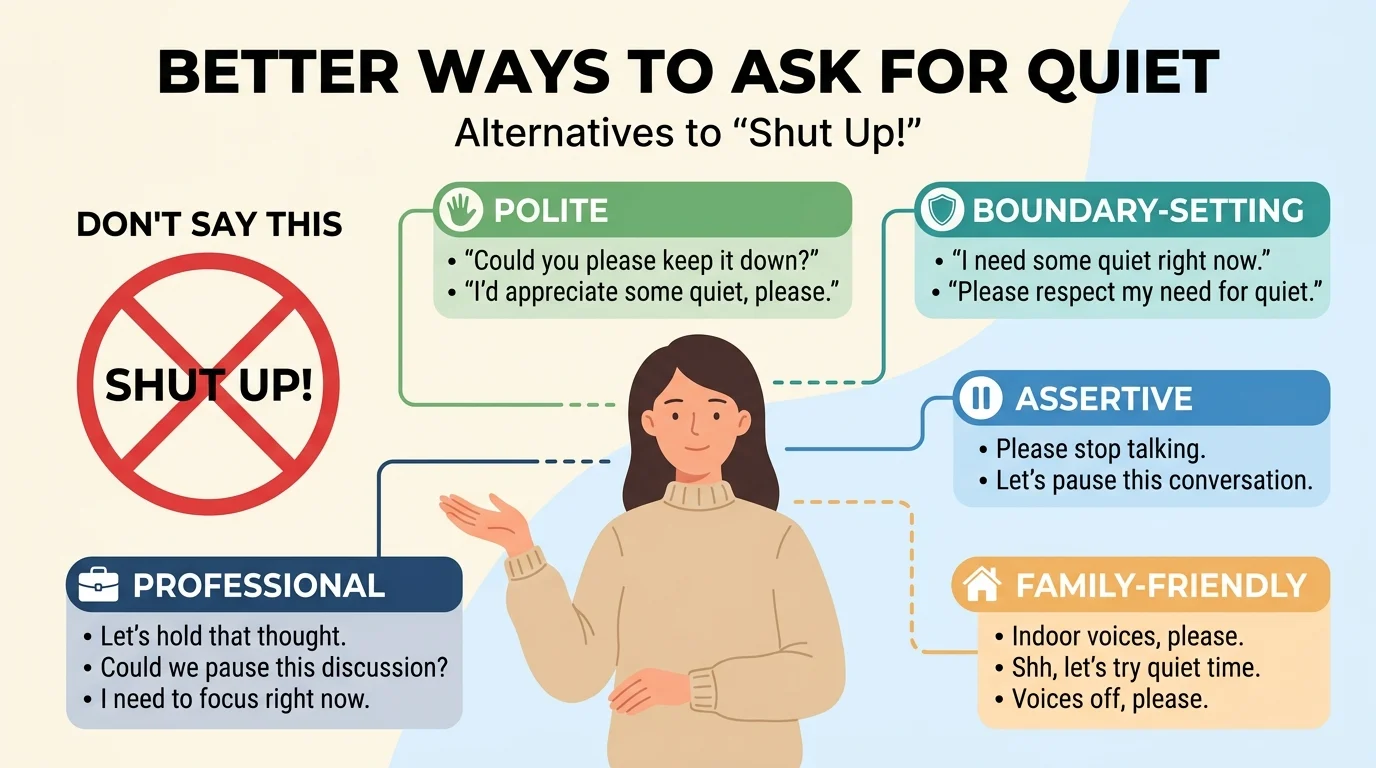
Quick Ans: Instead of saying “shut up,” try phrases that set boundaries without attacking. Top alternatives include: “I need a moment of quiet” (calm boundary), “Let’s pause this conversation” (respectful pause), “I’m not in a place to hear this right now” (honest limit), “Can we talk about this later?” (delayed response), and “That comment wasn’t kind” (direct feedback). The goal is to protect your peace without escalating conflict.
“Shut up” slips out when emotions run high. Maybe someone won’t stop talking. And Maybe a comment crossed a line. Maybe you’re overwhelmed and just need silence. Whatever the reason, those two words rarely land well. They escalate tension. And They hurt feelings. They often make things worse.
The good news? You have better options. Dozens of them, in fact. Instead of shutting someone down, you can set a boundary. You can ask for space. You can name the problem without attacking the person. These responses protect your peace and preserve the relationship.
This guide gives you 200+ things to say instead of “shut up.” Whether you’re arguing with a partner, dealing with a difficult coworker, or trying to calm a heated family moment, you’ll find words that work. Pick your situation, choose your tone, and respond with intention instead of impulse.
Polite and Respectful Alternatives
1. I need a moment of quiet, please
Example: When you’re overwhelmed and need silence
Meaning: You’re asking for space without dismissing the other person
2. Can we pause this conversation?
Example: When an argument is escalating
Meaning: You’re requesting a break to prevent things from getting worse
3. I’m not in a place to hear this right now
Example: When you’re emotionally drained
Meaning: You’re honestly stating your limit without blame
4. Let’s take a breather and come back to this
Example: When tensions are rising
Meaning: You’re proposing a pause to cool down
5. I’d like to finish my thought first
Example: When someone keeps interrupting
Meaning: You’re asserting your right to speak without aggression
6. Could you give me a minute to think?
Example: When you need processing time
Meaning: You’re asking for patience instead of silencing them
7. I hear you, but I need some space
Example: When you want to acknowledge them and set a limit
Meaning: You’re validating their words while protecting your needs
8. Let’s lower our voices and try again
Example: When the conversation is getting loud
Meaning: You’re redirecting the tone without shutting anyone down
9. I’m feeling overwhelmed, can we slow down?
Example: When the pace is too intense
Meaning: You’re naming your state and asking for adjustment
10. I want to listen, but I need a moment first
Example: When you’re too emotional to engage
Meaning: You’re expressing willingness while setting a condition
11. Please let me have a turn to speak
Example: When you can’t get a word in
Meaning: You’re asking for equal space in the conversation
12. Can we discuss this more calmly?
Example: When emotions are running hot
Meaning: You’re requesting a tone shift rather than silence
13. I need to step away for a bit
Example: When you’re close to snapping
Meaning: You’re removing yourself to prevent damage
14. I’m not ready to respond to that yet
Example: When you need time to process
Meaning: You’re delaying your reaction instead of shutting them down
15. Let’s revisit this when we’re both calmer
Example: When the moment isn’t productive
Meaning: You’re postponing the discussion for a better time
Boundary-Setting Responses
1. I’m not okay with being spoken to that way
Example: When someone is disrespectful
Meaning: You’re naming the behavior and setting a standard
2. That comment crossed a line for me
Example: When something offensive was said
Meaning: You’re identifying the boundary that was violated
3. I need you to stop talking about this topic
Example: When a subject is off-limits
Meaning: You’re clearly stating your limit
4. I won’t continue this conversation if it stays like this
Example: When the discussion is toxic
Meaning: You’re setting a condition for your participation
5. Please don’t interrupt me
Example: When someone keeps cutting you off
Meaning: You’re asking for basic conversational respect
6. I need you to respect my silence
Example: When you’ve chosen not to engage
Meaning: You’re protecting your right to not respond
7. This topic is not up for discussion
Example: When you want to shut down a subject firmly
Meaning: You’re clearly closing the door on a conversation
8. I’m setting a boundary here
Example: When you need to be explicit
Meaning: You’re naming your limit directly
9. I don’t want to talk about this anymore
Example: When you’re done with the subject
Meaning: You’re ending your participation clearly
10. That’s not something I’m willing to discuss
Example: When a topic feels invasive
Meaning: You’re declining without aggression
11. I need you to lower your voice
Example: When someone is yelling
Meaning: You’re addressing volume without silencing them
12. Please stop pushing this
Example: When someone won’t drop a subject
Meaning: You’re asking them to back off
13. I’m not going to engage with that
Example: When someone is baiting you
Meaning: You’re refusing to take the bait
14. I need space from this conversation
Example: When you’re emotionally flooded
Meaning: You’re asking for distance, not total silence
15. That’s enough for now
Example: When you want to end the discussion
Meaning: You’re closing the conversation firmly but calmly
Assertive and Direct Responses
1. I need you to stop
Example: When someone won’t quit
Meaning: You’re giving a clear, direct instruction
2. That’s enough
Example: When the conversation has run its course
Meaning: You’re firmly ending the exchange
3. I’m done with this discussion
Example: When you’ve reached your limit
Meaning: You’re declaring the conversation over
4. Stop talking over me
Example: When someone dominates the conversation
Meaning: You’re demanding space to speak
5. I’m not listening anymore
Example: When you’ve checked out
Meaning: You’re honestly stating your disengagement
6. This conversation is over
Example: When you’re ending things definitively
Meaning: You’re closing the door firmly
7. I need silence right now
Example: When you can’t handle more noise
Meaning: You’re stating your need directly
8. Do not speak to me like that
Example: When someone is disrespectful
Meaning: You’re setting a firm boundary on tone
9. I’m walking away now
Example: When you need to physically exit
Meaning: You’re removing yourself from the situation
10. I’ve asked you to stop, and I mean it
Example: When someone ignores your earlier request
Meaning: You’re reinforcing your boundary with firmness
11. I will not be spoken to this way
Example: When respect is missing
Meaning: You’re asserting your right to dignity
12. That’s not acceptable
Example: When behavior crosses a line
Meaning: You’re clearly naming what won’t be tolerated
13. I need you to leave me alone right now
Example: When you need complete space
Meaning: You’re asking for solitude directly
14. We’re done here
Example: When the conversation is finished
Meaning: You’re ending the exchange definitively
15. I’m not discussing this further
Example: When you’ve said all you can
Meaning: You’re closing the topic permanently
Responses for Arguments and Conflicts
1. I don’t want to fight
Example: When the argument is escalating
Meaning: You’re de-escalating by naming your intention
2. Can we argue without insults?
Example: When the fight turns personal
Meaning: You’re asking for respect during conflict
3. I need us to take a time out
Example: When things are too heated
Meaning: You’re calling for a pause in the conflict
4. Let’s stop before we say something we regret
Example: When you’re both on edge
Meaning: You’re preventing future damage
5. I’m too angry to talk right now
Example: When you need to cool off
Meaning: You’re honestly stating your emotional state
6. I love you, but I need a break from this
Example: When you want to preserve the relationship
Meaning: You’re balancing care with boundaries
7. Let’s agree to disagree
Example: When you can’t find common ground
Meaning: You’re ending the debate without a winner
8. I don’t want to keep going in circles
Example: When the argument repeats itself
Meaning: You’re naming the futility of continuing
9. Can we start over?
Example: When the conversation went off track
Meaning: You’re offering a reset
10. I need to calm down before I respond
Example: When your emotions are too high
Meaning: You’re taking responsibility for your reaction
11. This isn’t productive anymore
Example: When the fight has lost purpose
Meaning: You’re pointing out the lack of value in continuing
12. I’m not going to argue about this
Example: When you refuse to engage
Meaning: You’re declining the conflict
13. Let’s talk about this when we’re both calm
Example: When emotions are too raw
Meaning: You’re postponing for a better moment
14. I need you to hear me without interrupting
Example: When you feel unheard
Meaning: You’re asking for full attention
15. I want to resolve this, not win it
Example: When the goal is connection
Meaning: You’re reframing the conflict as a problem to solve together
Responses for Work and Professional Settings
1. I’d like to finish my point
Example: When a colleague interrupts in a meeting
Meaning: You’re asserting your right to complete your thought
2. Can we take this offline?
Example: When a discussion shouldn’t happen publicly
Meaning: You’re suggesting a private conversation
3. Let’s keep this professional
Example: When a conversation turns personal
Meaning: You’re redirecting to appropriate workplace conduct
4. I need to pause and gather my thoughts
Example: When you’re put on the spot
Meaning: You’re buying time without shutting anyone down
5. I’d prefer to discuss this privately
Example: When the topic is sensitive
Meaning: You’re requesting a more appropriate setting
6. I’m not comfortable with this line of questioning
Example: When questions feel invasive
Meaning: You’re declining to engage without aggression
7. Can we refocus on the agenda?
Example: When a meeting goes off track
Meaning: You’re redirecting to the purpose at hand
8. I need to step out for a moment
Example: When you need a break
Meaning: You’re excusing yourself respectfully
9. Let’s schedule time to discuss this properly
Example: When there isn’t enough time now
Meaning: You’re proposing a better setting
10. I don’t have the information to respond right now
Example: When you’re caught unprepared
Meaning: You’re deferring without dismissing
11. I’d like to hear other perspectives first
Example: When one voice dominates
Meaning: You’re inviting broader input
12. That comment isn’t appropriate for this setting
Example: When professionalism is breached
Meaning: You’re naming the issue directly but calmly
13. Can we keep the discussion respectful?
Example: When the tone is deteriorating
Meaning: You’re setting a standard for the conversation
14. I need to consult with my team before responding
Example: When you can’t answer immediately
Meaning: You’re buying time professionally
15. Let’s table this for now
Example: When the discussion isn’t productive
Meaning: You’re postponing without conflict
Responses for Family and Personal Relationships
1. I need some space right now
Example: When family dynamics get intense
Meaning: You’re asking for distance without rejection
2. I love you, but I can’t talk about this now
Example: When you need to protect your peace
Meaning: You’re balancing love with boundaries
3. Let’s not do this today
Example: When you don’t have the energy
Meaning: You’re postponing without dismissing
4. I need you to listen without judging
Example: When you feel criticized
Meaning: You’re asking for a different kind of attention
5. I’m not going to engage in this argument
Example: When a family fight starts
Meaning: You’re declining the conflict
6. Can we just be quiet together?
Example: When you want presence without words
Meaning: You’re redefining connection
7. I need a break from this conversation
Example: When you’re emotionally exhausted
Meaning: You’re asking for a pause
8. I don’t want to hurt you, so I’m going to stop talking
Example: When you’re afraid of saying something harsh
Meaning: You’re protecting the relationship by pausing
9. Let’s talk about something else
Example: When the topic is too heavy
Meaning: You’re redirecting gently
10. I need to process this on my own first
Example: When you need solitude
Meaning: You’re asking for time before discussing
11. I’m not ready to forgive this yet
Example: When you need space to heal
Meaning: You’re being honest about your timeline
12. I need you to respect my no
Example: When someone won’t accept your boundary
Meaning: You’re reinforcing your limit firmly
13. I’m going to take some time for myself
Example: When you need self-care
Meaning: You’re prioritizing your well-being
14. Let’s not let this ruin our time together
Example: When a disagreement threatens the moment
Meaning: You’re choosing connection over conflict
15. I need you to stop, for both our sakes
Example: When you want to prevent damage
Meaning: You’re protecting the relationship with honesty
FAQs
What can I say instead of “shut up” politely?
Try “I need a moment of quiet” or “Can we pause this conversation?” These set boundaries without attacking the other person.
How do I tell someone to stop talking without being rude?
Use phrases like “I’d like to finish my thought” or “Can we take a break?” These assert your needs respectfully.
What’s a good response when someone won’t stop talking?
“I need you to stop” or “That’s enough for now” are direct but not aggressive. They clearly state your limit.
How do I shut down a conversation I don’t want to have?
“I’m not discussing this further” or “That’s not something I’m willing to discuss” close the topic without insults.
What if someone is being disrespectful?
“I’m not okay with being spoken to that way” or “Do not speak to me like that” set firm boundaries on behavior.
How do I handle interruptions in a meeting?
“I’d like to finish my point” or “Can we take this offline?” work well in professional settings.
What’s a good alternative during an argument?
“I don’t want to fight” or “Let’s stop before we say something we regret” de-escalate the conflict.
How do I ask for space without hurting feelings?
“I need some space right now” or “I love you, but I need a break from this” balance care with boundaries.
What if the person keeps pushing after I set a boundary?
Repeat yourself calmly: “I’ve asked you to stop, and I mean it.” You may need to physically remove yourself.
Is it ever okay to just walk away?
Yes. “I’m walking away now” is a valid response when a conversation is harmful.
How do I respond to someone who won’t let me speak?
“Please let me have a turn to speak” or “I need you to hear me without interrupting” assert your right to be heard.
What’s a good text response instead of “shut up”?
“I need a break from this conversation” or “Let’s talk later” work well over text.
How do I tell a family member to stop without causing drama?
“Let’s not do this today” or “I need to process this on my own first” are gentle but firm.
What if I’m the one who needs to stop talking?
“I need to step away for a bit” or “I’m too angry to talk right now” take responsibility for your own state.
How do I set a boundary about a specific topic?
“I need you to stop talking about this topic” or “This topic is not up for discussion” are clear and direct.
Conclusion
“Shut up” is rarely the answer, even when you’re frustrated, overwhelmed, or at your limit. The words you choose instead can protect your peace, preserve your relationships, and set boundaries that actually work.
From polite requests to firm assertions, this guide gives you 200+ alternatives for every situation. Bookmark it for the next time you feel those two words rising. Share it with someone who struggles with conflict. Save it for when you need better words in a heated moment.
The best response is the one that honors your needs without harming the other person. You can be firm without being cruel. You can set boundaries without shutting people down. Choose your words with intention, and watch how much better conversations go.
