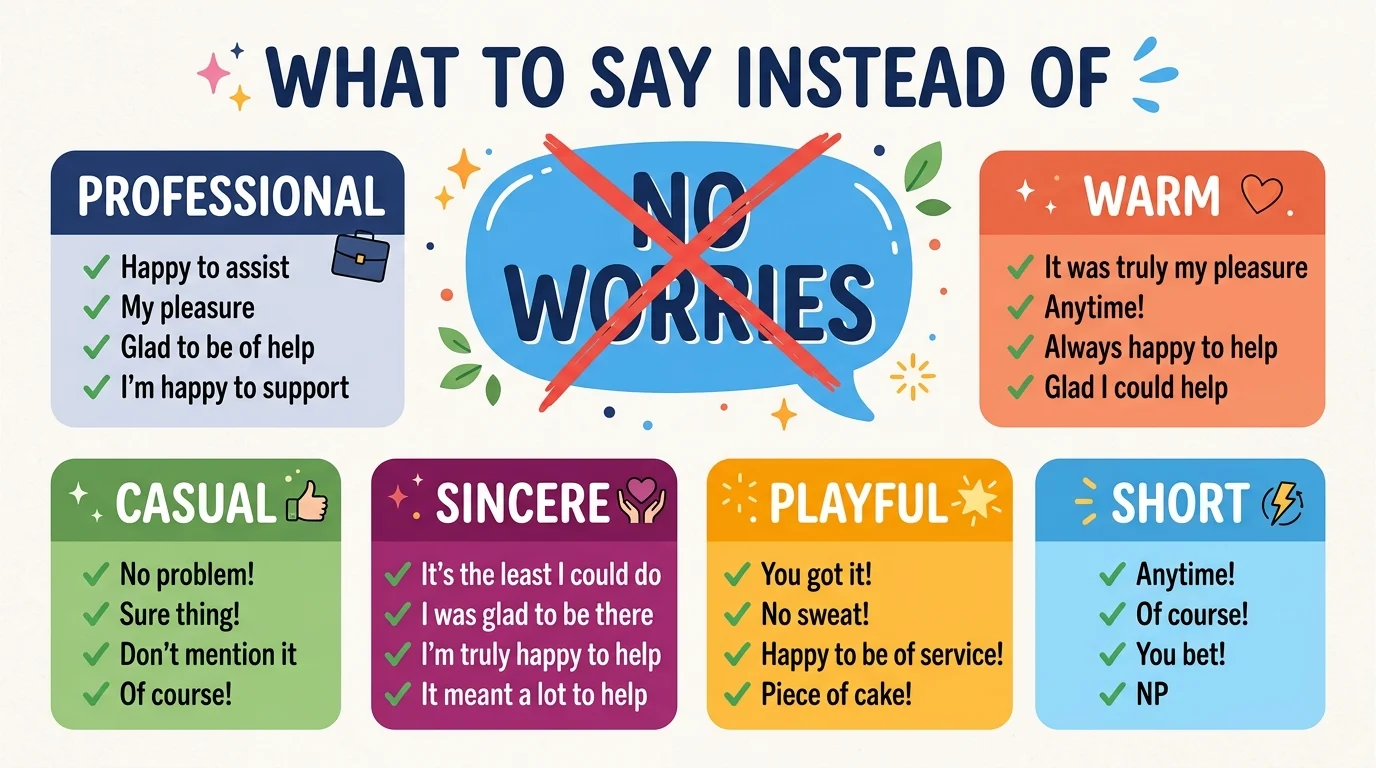
Quick Ans: The best alternatives to “no worries” depend on the situation. For professional settings, try “Happy to help” or “My pleasure.” For casual chats, “You’re good” or “All good” work perfectly. For warm connections, “Anytime” or “Of course” feel sincere. For formal emails, “You’re very welcome” or “It was no trouble at all” sound polished. For friendly texts, “Don’t mention it” or “That’s what I’m here for” keep things light.
“No worries” is one of those phrases that slips out automatically. Someone thanks you. And Someone apologizes. Someone asks for a favor. And without thinking, you say “no worries.” It’s fine. It’s friendly. But it’s also repetitive, and sometimes it doesn’t quite fit the moment.
The problem with “no worries” is that it can feel dismissive. It can sound like you’re minimizing their gratitude or brushing off their apology. In professional settings, it can come across as too casual. In emotional moments, it can miss the mark entirely.
The good news? You have options. Lots of them. Whether you want to sound warmer, more professional, more sincere, or more fun, there’s a better phrase for every situation. This guide gives you 200+ alternatives to “no worries” across every mood and context. Pick your vibe, choose your words, and say exactly what you mean.
Professional Alternatives
1. Happy to help
Example: When a colleague thanks you for assistance
Meaning: You’re expressing genuine willingness and professionalism
2. My pleasure
Example: When a client or customer thanks you
Meaning: You’re signaling that helping them was enjoyable, not a burden
3. You’re very welcome
Example: When you want to be polite and formal
Meaning: You’re acknowledging their thanks with grace
4. It was no trouble at all
Example: When someone apologizes for taking your time
Meaning: You’re reassuring them that helping didn’t inconvenience you
5. Glad I could assist
Example: When you’ve solved a problem for someone
Meaning: You’re expressing satisfaction in being useful
6. Always happy to help
Example: When you want to reinforce your reliability
Meaning: You’re signaling ongoing willingness to support them
7. That’s what I’m here for
Example: When a colleague thanks you for doing your job
Meaning: You’re framing your help as part of your role
8. I’m glad it worked out
Example: When you helped resolve an issue
Meaning: You’re expressing relief and satisfaction with the outcome
9. Don’t mention it
Example: When you want to be gracious but brief
Meaning: You’re downplaying your effort politely
10. It was my pleasure to assist
Example: When you want to be formal and warm
Meaning: You’re combining professionalism with genuine care
11. Happy to be of service
Example: When you want to sound polished
Meaning: You’re framing your help as a privilege
12. I’m just glad I could help
Example: When you want to be humble and sincere
Meaning: You’re focusing on the outcome rather than your effort
13. No trouble whatsoever
Example: When someone apologizes for bothering you
Meaning: You’re firmly reassuring them they didn’t inconvenience you
14. Consider it handled
Example: When you’ve completed a task for someone
Meaning: You’re confidently confirming the issue is resolved
15. I was glad to do it
Example: When you want to be sincere and professional
Meaning: You’re expressing genuine willingness
Warm and Friendly Alternatives
1. Anytime
Example: When a friend thanks you for being there
Meaning: You’re signaling you’ll always be available for them
2. Of course
Example: When someone thanks you for something obvious
Meaning: You’re implying your help was a given
3. That’s what friends are for
Example: When helping someone close to you
Meaning: You’re framing your support as part of the relationship
4. I’ve got you
Example: When you want to be reassuring and modern
Meaning: You’re promising support and reliability
5. You’d do the same for me
Example: When the relationship is mutual
Meaning: You’re acknowledging the reciprocity in your bond
6. I’m always here for you
Example: When you want to express ongoing support
Meaning: You’re offering consistent availability
7. Don’t even think about it
Example: When someone apologizes for asking a favor
Meaning: You’re warmly dismissing any sense of obligation
8. It’s nothing
Example: When you want to downplay your effort
Meaning: You’re gently minimizing what you did
9. You don’t have to thank me
Example: When you want to be humble and warm
Meaning: You’re expressing that your help came naturally
10. I wanted to
Example: When you helped voluntarily
Meaning: You’re clarifying that your help was a choice, not an obligation
11. That’s what I’m here for
Example: When a friend thanks you for listening
Meaning: You’re reinforcing your role as a support system
12. I’m happy I could do it
Example: When you genuinely enjoyed helping
Meaning: You’re sharing your positive feelings about the exchange
13. It was the least I could do
Example: When someone thanks you for a significant favor
Meaning: You’re humbly acknowledging their importance to you
14. You never have to apologize for that
Example: When someone apologizes for needing help
Meaning: You’re warmly removing any guilt from the situation
15. I’m just glad you’re okay
Example: When you helped someone through a tough time
Meaning: You’re prioritizing their well-being over your effort
Casual and Relaxed Alternatives
1. All good
Example: When you want to be brief and easygoing
Meaning: You’re confirming everything is fine with a modern phrase
2. You’re good
Example: When someone apologizes for something minor
Meaning: You’re casually reassuring them there’s no issue
3. We’re good
Example: When you want to be inclusive and chill
Meaning: You’re confirming the relationship is fine
4. No problem
Example: When you want a simple, familiar alternative
Meaning: You’re acknowledging their thanks without fuss
5. It’s all good
Example: When you want to be relaxed and warm
Meaning: You’re emphasizing that everything is fine
6. Sure thing
Example: When you want to be friendly and casual
Meaning: You’re agreeing or acknowledging with ease
7. No big deal
Example: When you want to downplay something minor
Meaning: You’re signaling the situation isn’t worth stressing over
8. Don’t sweat it
Example: When someone is worried about bothering you
Meaning: You’re telling them to relax because it’s fine
9. It’s fine
Example: When you want to be simple and clear
Meaning: You’re reassuring them everything is okay
10. We’re cool
Example: When you want to be modern and relaxed
Meaning: You’re confirming there’s no issue between you
11. No stress
Example: When you want to be casual and reassuring
Meaning: You’re telling them not to worry
12. Easy
Example: When you want to be brief and confident
Meaning: You’re signaling the situation was simple
13. It’s whatever
Example: When you want to be ultra-casual
Meaning: You’re downplaying the importance of the matter
14. We’re fine
Example: When you want to be clear and relaxed
Meaning: You’re confirming there’s no problem
15. No sweat
Example: When you want to be friendly and casual
Meaning: You’re reassuring them it was no effort
Sincere and Heartfelt Alternatives
1. I’m glad I could be there for you
Example: When you supported someone through something meaningful
Meaning: You’re expressing genuine care about their well-being
2. It means a lot that you asked me
Example: When someone trusted you with something important
Meaning: You’re honored they came to you
3. I’d do it again in a heartbeat
Example: When you helped someone through a difficult time
Meaning: You’re expressing unconditional willingness
4. You’re important to me
Example: When you want to be direct about your care
Meaning: You’re linking your help to your feelings for them
5. I wanted to be here for you
Example: When you supported someone emotionally
Meaning: You’re clarifying that your presence was intentional
6. I’m just happy you’re doing better
Example: When you helped someone through a hard time
Meaning: You’re focusing on their recovery and well-being
7. You don’t ever have to thank me for that
Example: When someone thanks you for emotional support
Meaning: You’re expressing that your care is unconditional
8. I care about you, so it’s easy
Example: When you want to be honest about your motives
Meaning: You’re linking your help to your affection
9. I’m here whenever you need me
Example: When you want to promise ongoing support
Meaning: You’re offering consistent availability
10. It was important to me to help
Example: When the situation mattered deeply
Meaning: You’re sharing that your effort was meaningful to you
11. I’m just glad I could make things easier
Example: When you alleviated someone’s burden
Meaning: You’re focusing on the positive outcome
12. You never have to face things alone
Example: When you supported someone through isolation
Meaning: You’re promising companionship
13. I’m grateful you let me help
Example: When someone allowed you to support them
Meaning: You’re reframing the exchange as a gift to you
14. Your well-being matters to me
Example: When you want to be clear about your priorities
Meaning: You’re stating that their health and happiness are important
15. I’m always in your corner
Example: When you want to express loyalty
Meaning: You’re promising ongoing support and advocacy
Playful and Funny Alternatives
1. You owe me one
Example: When you want to be playfully transactional
Meaning: You’re jokingly suggesting they owe you a favor
2. That’ll be $20
Example: When you want to be hilariously sarcastic
Meaning: You’re joking that your help comes with a price
3. I’ll add it to your tab
Example: When you want to be playfully keeping score
Meaning: You’re jokingly tracking favors
4. Just remember this when I need something
Example: When you want to be mock-scheming
Meaning: You’re humorously implying future reciprocity
5. Don’t get used to it
Example: When you want to be playfully dismissive
Meaning: You’re joking that your kindness is limited
6. I’m secretly keeping score
Example: When you want to be humorously suspicious
Meaning: You’re playfully pretending to track favors
7. You’re welcome, I guess
Example: When you want to be mock-reluctant
Meaning: You’re jokingly acting like helping was a burden
8. Fine, but only because I like you
Example: When you want to be playfully conditional
Meaning: You’re humorously admitting favoritism
9. I accept payment in snacks
Example: When you want to be fun and food-motivated
Meaning: You’re jokingly requesting edible compensation
10. This counts as my good deed for the year
Example: When you want to be dramatically generous
Meaning: You’re humorously framing your help as charity
11. I’m basically a superhero now
Example: When you want to be playfully self-congratulatory
Meaning: You’re jokingly elevating your assistance
12. Remember me when you’re famous
Example: When you want to be absurdly forward-looking
Meaning: You’re humorously predicting their future success
13. I’ll send you my invoice
Example: When you want to be dry and witty
Meaning: You’re jokingly treating your help as billable work
14. You’re lucky I’m so nice
Example: When you want to be playfully arrogant
Meaning: You’re humorously acknowledging your own generosity
15. That’s one favor down, three to go
Example: When you want to be playfully keeping count
Meaning: You’re jokingly tracking a running tally
Short and Simple Alternatives
1. Anytime
Example: When you want to be brief and warm
Meaning: You’re signaling ongoing availability
2. Sure
Example: When you want to be casual and quick
Meaning: You’re acknowledging with minimal effort
3. Yep
Example: When you want to be simple and friendly
Meaning: You’re confirming without elaboration
4. Of course
Example: When you want to be polite and brief
Meaning: You’re implying your help was natural
5. My pleasure
Example: When you want to be formal but concise
Meaning: You’re expressing graciousness in two words
6. Glad to help
Example: When you want to be warm and brief
Meaning: You’re expressing satisfaction in assisting
7. Happy to
Example: When you want to be friendly and efficient
Meaning: You’re signaling willingness
8. No problem
Example: When you want a classic short response
Meaning: You’re casually dismissing any concern
9. All good
Example: When you want to be modern and brief
Meaning: You’re confirming everything is fine
10. You bet
Example: When you want to be cheerful and quick
Meaning: You’re agreeing with enthusiasm
11. For sure
Example: When you want to be easygoing
Meaning: You’re confirming casually
12. Always
Example: When you want to promise ongoing support
Meaning: You’re signaling consistent availability
13. Absolutely
Example: When you want to be positive and clear
Meaning: You’re affirming with confidence
14. No doubt
Example: When you want to be casually reassuring
Meaning: You’re expressing certainty
15. Happy to help
Example: When you want a go-to professional phrase
Meaning: You’re combining warmth and professionalism
FAQs
What can I say instead of “no worries”?
It depends on the situation. “Happy to help” works professionally. “Anytime” is warm and friendly. “All good” is casual and modern. “My pleasure” is formal and polished.
Is “no worries” unprofessional?
It’s not inherently unprofessional, but it can feel too casual in formal settings. “Happy to help” or “My pleasure” are safer choices for work emails.
What’s a good alternative for a work email?
“Happy to help,” “My pleasure,” or “Glad I could assist” are professional and warm.
What’s a warm alternative for friends?
“Anytime,” “That’s what friends are for,” or “I’ve got you” are friendly and sincere.
What’s a short alternative?
“Anytime,” “Sure,” or “Of course” are brief and effective.
What’s a funny alternative?
“You owe me one,” “That’ll be $20,” or “I’ll add it to your tab” are playful and humorous.
What’s a sincere alternative?
“I’m glad I could be there for you” or “You’re important to me” express genuine care.
Can I use “no problem” instead?
Yes, “no problem” is a classic alternative. It’s casual and widely accepted.
What’s the most professional option?
“My pleasure” or “Happy to help” are among the most professional choices.
What’s the most modern option?
“All good,” “You’re good,” or “We’re cool” are modern and casual.
What if I want to sound more sincere?
“I wanted to help” or “I’m glad I could make things easier” express genuine care.
What’s a good alternative for customer service?
“Happy to help,” “My pleasure,” or “It was no trouble at all” work well in customer-facing roles.
Can I say “don’t mention it”?
Yes, “don’t mention it” is a gracious and polite alternative.
What’s a good alternative for text messages?
“Anytime,” “All good,” or “No problem” work well in texts.
What if I don’t want to sound dismissive?
Avoid phrases that minimize their gratitude. Instead, try “I’m glad I could help” or “It was important to me to be there.”
Conclusion
“No worries” is fine, but it’s not your only option. The right alternative can make you sound warmer, more professional, more sincere, or more fun. It all depends on the moment and the person you’re talking to.
From “happy to help” to “anytime” to “you owe me one,” this guide gives you 200+ ways to replace “no worries” in every situation. Bookmark it for your next email, text, or conversation. Share it with a friend who defaults to the same phrase. Save it for when you want to say exactly what you mean.
The best response is the one that feels natural to you. Choose your words, speak from the heart, and let your kindness shine through. There’s always a better way to say “no worries.”
