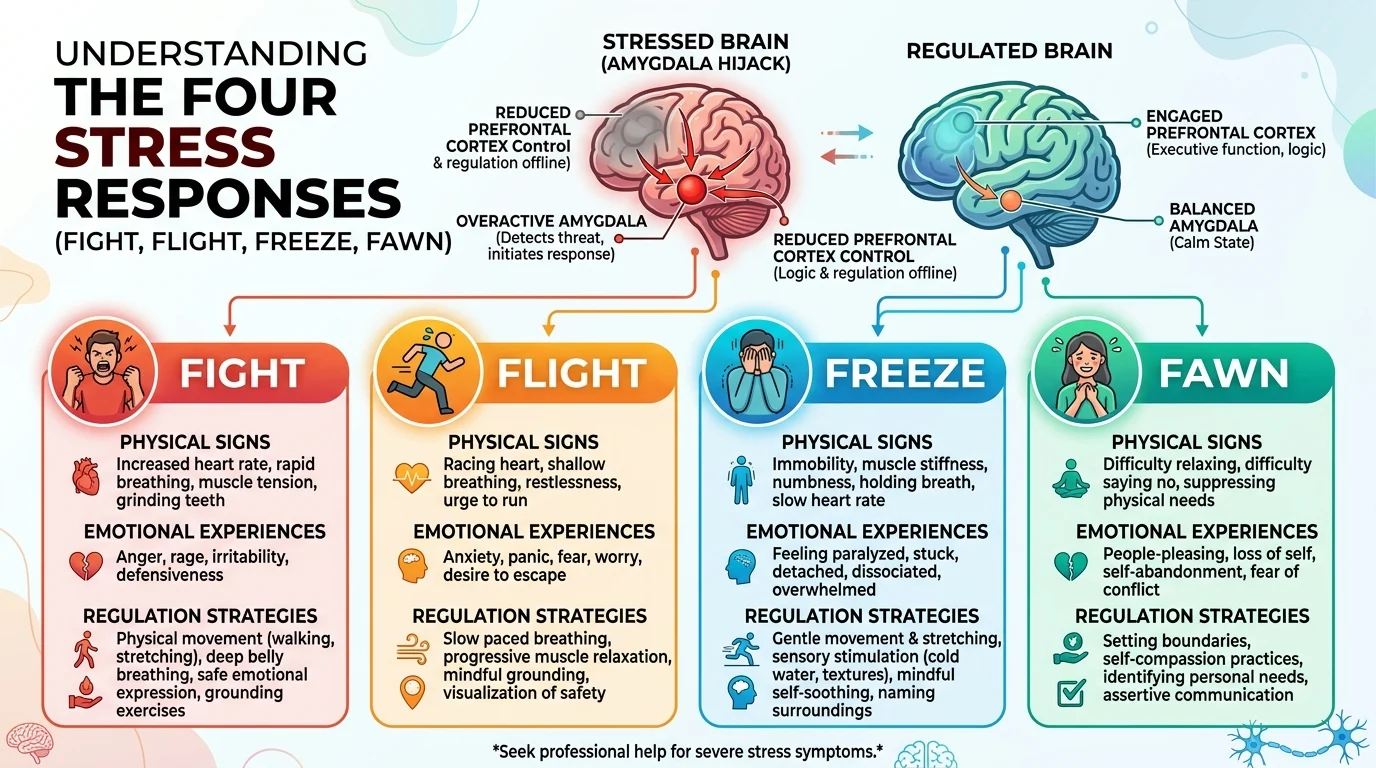
Quick Ans: Hypersexuality as a trauma response is a compulsive need for sexual activity driven by unresolved psychological distress, not high libido. It is one of several trauma responses including fight, flight, freeze, fawn, and appease. Key signs include using sex to numb emotions, feeling shame after encounters, inability to stop despite consequences, and sex feeling like a need rather than a want. Treatment includes trauma-informed therapy, EMDR, CBT, and somatic work. It is not a moral failing, but a survival mechanism.
Trauma changes how the brain and body respond to the world. Some survivors shut down. Some become hypervigilant. Others develop a compulsive need for sexual activity that feels impossible to control. This is hypersexuality as a trauma response, and it is far more common than most people realize.
Hypersexuality trauma response refers to compulsive sexual behavior driven by unresolved psychological distress rather than genuine desire. Survivors often use sex to numb painful emotions, regain a sense of control, or recreate familiar dynamics from past abuse. It can feel like a need rather than a want, and it often leaves people feeling empty and ashamed afterward.
The connection between trauma and hypersexuality is well-documented in clinical literature. Survivors of childhood sexual abuse, assault, and other forms of trauma frequently report periods of compulsive sexual behavior. Understanding this response matters because it helps survivors and their loved ones recognize the pattern without judgment. Healing is possible, and it starts with understanding. Let’s explore this topic with the sensitivity and clarity it deserves.
What Is Hypersexuality Trauma Response?
1. The Core Definition
Hypersexuality is a compulsive need for sexual activity driven by unresolved psychological distress, not high libido.
2. A Trauma Response
It is one of several survival responses including fight, flight, freeze, fawn, and appease.
3. Different from High Libido
A high libido is about desire. Hypersexuality is about compulsion, often without pleasure.
4. Often Rooted in Childhood Trauma
Survivors of childhood sexual abuse frequently develop hypersexuality as a coping mechanism.
5. Can Follow Any Trauma
Assault, neglect, emotional abuse, and combat trauma can all trigger hypersexual behavior.
6. A Way to Numb Pain
Sex can temporarily block out intrusive thoughts, flashbacks, and difficult emotions.
7. A Way to Regain Control
Some survivors recreate trauma dynamics to feel in control of what happened to them.
8. Often Accompanied by Shame
The behavior rarely feels empowering. It usually leaves survivors feeling empty and ashamed.
9. Can Feel Like an Addiction
Many survivors describe it as a compulsion they cannot stop despite wanting to.
10. Not a Moral Failing
Hypersexuality is a survival mechanism, not a character flaw.
11. Often Co-Occurs with Other Conditions
PTSD, depression, anxiety, and borderline personality disorder frequently co-occur.
12. Underdiagnosed and Misunderstood
Many survivors never disclose their behavior due to shame and stigma.
13. Treatable with Trauma-Informed Care
Therapy can help survivors understand and heal the underlying trauma.
14. Different from Hypersexual Disorder
Hypersexual disorder is a proposed diagnosis. Trauma response hypersexuality is a distinct phenomenon.
15. Recovery Is Possible
Healing involves addressing the root trauma, not just the behavior.
The Science Behind Trauma and Hypersexuality
1. The Brain’s Reward System
Trauma disrupts dopamine pathways, making sexual activity feel intensely rewarding.
2. The Amygdala’s Role
A hyperactive amygdala keeps the nervous system in a state of threat, driving compulsive behavior.
3. The Prefrontal Cortex
Trauma impairs the prefrontal cortex, reducing impulse control and decision-making.
4. The HPA Axis
Dysregulation of the stress response system contributes to compulsive behavior.
5. The Vagus Nerve
Poor vagal tone is associated with difficulty regulating emotions and impulses.
6. Dissociation as a Factor
Sex can trigger dissociation, allowing survivors to escape their bodies temporarily.
7. Reenactment of Trauma
Some survivors unconsciously recreate traumatic dynamics to process them.
8. Endorphin Release
Sexual activity releases endorphins that temporarily relieve emotional pain.
9. Oxytocin’s Dual Role
Oxytocin can promote bonding but also reinforce unhealthy attachment patterns.
10. Cortisol’s Impact
Chronic cortisol elevation disrupts mood regulation and impulse control.
11. Neuroplasticity Offers Hope
The brain can heal and form new pathways with therapy and support.
12. Trauma’s Effect on Attachment
Insecure attachment styles often accompany hypersexual behavior.
13. The Role of Memory
Implicit memories of trauma can trigger sexual urges without conscious awareness.
14. Fight, Flight, Freeze, and Fawn
Hypersexuality can be a variant of the fawn or appease response.
15. The Polyvagal Perspective
Nervous system dysregulation drives many trauma responses, including hypersexuality.
Signs and Symptoms
1. Compulsive Sexual Activity
Engaging in sexual activity more frequently than intended or desired.
2. Using Sex to Numb Emotions
Turning to sex to escape sadness, anger, anxiety, or emptiness.
3. Feeling Out of Control
Wanting to stop but feeling unable to reduce sexual behavior.
4. Shame After Encounters
Feeling empty, ashamed, or disgusted after sexual activity.
5. Sex Feels Like a Need
The urge feels like a biological need rather than a want.
6. Risky Sexual Behavior
Engaging in unsafe sex, multiple partners, or situations that feel dangerous.
7. Neglecting Responsibilities
Sexual pursuits interfere with work, relationships, and self-care.
8. Tolerance Building
Needing more frequent or intense experiences to feel the same effect.
9. Withdrawal Symptoms
Feeling anxious, irritable, or distressed when unable to engage in sex.
10. Failed Attempts to Stop
Repeated unsuccessful efforts to cut back or stop the behavior.
11. Secrecy and Lying
Hiding sexual behavior from partners, friends, and family.
12. Emotional Numbness
Feeling disconnected from emotions during and after sex.
13. Dissociation During Sex
Losing awareness of time, body, or surroundings during sexual activity.
14. Relationship Problems
Struggling to maintain healthy, stable relationships.
15. Co-Occurring Mental Health Issues
Depression, anxiety, PTSD, or substance use alongside hypersexuality.
How Hypersexuality Differs from Healthy Sexuality
1. Desire vs Compulsion
Healthy sexuality is about desire. Hypersexuality is about compulsion.
2. Pleasure vs Numbing
Healthy sex brings pleasure. Hypersexual behavior often numbs pain.
3. Connection vs Escape
Healthy sex fosters connection. Hypersexual behavior often avoids intimacy.
4. Choice vs Loss of Control
Healthy sexuality involves choice. Hypersexuality feels out of control.
5. Satisfaction vs Shame
Healthy sex leaves you satisfied. Hypersexual behavior often leaves shame.
6. Balance vs Obsession
Healthy sexuality is one part of life. Hypersexuality dominates thoughts and behavior.
7. Consent and Safety
Healthy sexuality respects boundaries. Hypersexuality often involves risk.
8. Emotional Presence
Healthy sex involves emotional presence. Hypersexuality often involves dissociation.
9. Self-Worth
Healthy sexuality is not tied to self-worth. Hypersexuality often is.
10. Relationships
Healthy sex enhances relationships. Hypersexuality often damages them.
11. Motivation
Healthy sex is motivated by desire. Hypersexuality is motivated by distress.
12. Aftermath
Healthy sex feels positive. Hypersexuality feels empty or shameful.
13. Frequency Isn’t the Issue
The problem isn’t how often you have sex, but why and how it feels.
14. Context Matters
The same behavior can be healthy in one context and compulsive in another.
15. Self-Compassion Is Key
Understanding the difference helps survivors heal without judgment.
The Connection to Other Trauma Responses
1. Fight Response
Hypersexuality can be a form of fighting back, reclaiming power through sex.
2. Flight Response
Sex can be an escape from painful emotions and memories.
3. Freeze Response
Dissociation during sex is a freeze response.
4. Fawn Response
Using sex to please others and avoid conflict is a fawn response.
5. Appease Response
Similar to fawn, appeasing involves meeting others’ needs to feel safe.
6. The Sixth Response
Some clinicians identify “friend” or “flop” as additional responses.
7. Trauma Responses Are Adaptive
Each response helped you survive. None are moral failures.
8. Responses Can Shift
Your dominant response may change over time or across situations.
9. Hypersexuality as Self-Harm
Some survivors use sex as a form of self-punishment.
10. Hypersexuality as Reenactment
Recreating trauma dynamics can be an attempt to master them.
11. Hypersexuality as Control
Choosing when and how sex happens can feel like reclaiming control.
12. Hypersexuality as Connection
Some survivors seek sex to feel wanted, even if it’s not genuine intimacy.
13. Hypersexuality as Numbing
Sex can block out intrusive thoughts and flashbacks.
14. Hypersexuality as Validation
Some survivors use sex to feel worthy or lovable.
15. Healing All Responses
Recovery involves addressing the underlying trauma, not just the behavior.
Getting Help and Healing
1. Trauma-Informed Therapy
Seek a therapist trained in trauma, not just sex addiction.
2. EMDR Therapy
Eye Movement Desensitization and Reprocessing helps process traumatic memories.
3. Cognitive Behavioral Therapy
CBT helps identify and change thought patterns driving compulsive behavior.
4. Somatic Therapy
Body-based approaches release stored trauma and restore nervous system regulation.
5. Dialectical Behavior Therapy
DBT teaches distress tolerance and emotion regulation skills.
6. Group Therapy
Support groups for trauma survivors reduce isolation and shame.
7. Medication
Antidepressants or anti-anxiety medications may help manage symptoms.
8. Mindfulness Practices
Meditation and grounding techniques build awareness and reduce impulsivity.
9. Journaling
Writing about triggers, emotions, and patterns builds self-understanding.
10. Exercise
Physical activity discharges stress hormones and improves mood.
11. Sleep Hygiene
Rest restores the nervous system’s capacity for regulation.
12. Healthy Boundaries
Learning to set and maintain boundaries protects your well-being.
13. Support Networks
Safe relationships help the nervous system feel secure.
14. Self-Compassion
Treating yourself with kindness reduces shame and promotes healing.
15. Patience
Healing takes time. Progress isn’t linear, and setbacks are part of the journey.
Supporting a Loved One
1. Educate Yourself
Learn about trauma and hypersexuality before offering support.
2. Lead with Compassion
Avoid judgment. Hypersexuality is a survival mechanism, not a choice.
3. Listen Without Fixing
Sometimes the most helpful thing is to listen without offering solutions.
4. Avoid Shaming Language
Words like “promiscuous” or “abuse disorder” can deepen shame.
5. Encourage Professional Help
Gently suggest therapy with a trauma-informed provider.
6. Set Your Own Boundaries
Supporting someone doesn’t mean tolerating harmful behavior.
7. Take Care of Yourself
Supporting a survivor can be draining. Seek your own support.
8. Be Patient
Healing is not linear. Expect ups and downs.
9. Avoid Ultimatums
Ultimatums can backfire. Focus on encouragement instead.
10. Learn Their Triggers
Understanding triggers helps you support without accidentally causing harm.
11. Validate Their Experience
Acknowledge their pain without minimizing it.
12. Offer Practical Help
Sometimes help means driving to appointments or making meals.
13. Respect Their Privacy
Don’t share their story without permission.
14. Celebrate Small Wins
Acknowledge progress, no matter how small.
15. Know When to Step Back
If your own mental health suffers, it’s okay to step back.
Frequently Asked Questions
What is hypersexuality as a trauma response?
It’s a compulsive need for sexual activity driven by unresolved psychological distress, not high libido.
Is hypersexuality a real trauma response?
Yes. It’s well-documented in clinical literature and recognized by trauma-informed therapists.
How common is hypersexuality after trauma?
Studies show significant rates among survivors of childhood sexual abuse and assault. It’s more common than many realize.
Is hypersexuality the same as sex addiction?
No. Sex addiction is a controversial diagnosis. Hypersexuality as a trauma response is distinct.
Can men experience hypersexuality trauma response?
Yes. Men and people of all genders can experience hypersexuality as a trauma response.
Why does trauma cause hypersexuality?
Trauma disrupts the brain’s reward system, stress response, and impulse control, driving compulsive behavior.
How do I know if I have hypersexuality?
Signs include feeling out of control, using sex to numb emotions, and shame after encounters.
Is hypersexuality a form of self-harm?
Sometimes. Some survivors use sex as a form of self-punishment.
Can hypersexuality be cured?
It’s not about curing but healing. Trauma-informed therapy helps survivors understand and address the root causes.
What therapy is best for hypersexuality trauma response?
EMDR, CBT, somatic therapy, and DBT are all effective. Seek a trauma-informed therapist.
Does medication help?
Antidepressants and anti-anxiety medications may help manage symptoms. Consult a psychiatrist.
How long does healing take?
Healing is individual. It takes time, and progress isn’t linear.
Can I heal without therapy?
Therapy significantly helps, but self-compassion, support networks, and healthy habits also support healing.
How do I support a loved one with hypersexuality?
Educate yourself, lead with compassion, encourage professional help, and set your own boundaries.
Conclusion
Hypersexuality as a trauma response is a survival mechanism, not a moral failing. It develops when the brain and body try to cope with overwhelming pain, and it can feel impossible to control. But healing is possible.
Understanding the connection between trauma and compulsive sexual behavior helps survivors recognize their patterns without judgment. It helps loved ones offer support without shame. And it helps everyone involved approach recovery with compassion instead of criticism.
Therapy works. EMDR, CBT, somatic therapy, and DBT all help survivors process trauma and restore nervous system regulation. Self-compassion, healthy boundaries, and safe relationships support the healing process. You are not broken. You are not alone. And you deserve to feel whole.
Share this guide with someone who needs to understand this topic. Bookmark it for the next time you or someone you love needs clarity. Healing is a journey, and it starts with understanding.
Discover More:
- Incident Response Unit: Complete Guide for 2026
- Managed Detection and Response Solutions: Complete Guide for 2026
