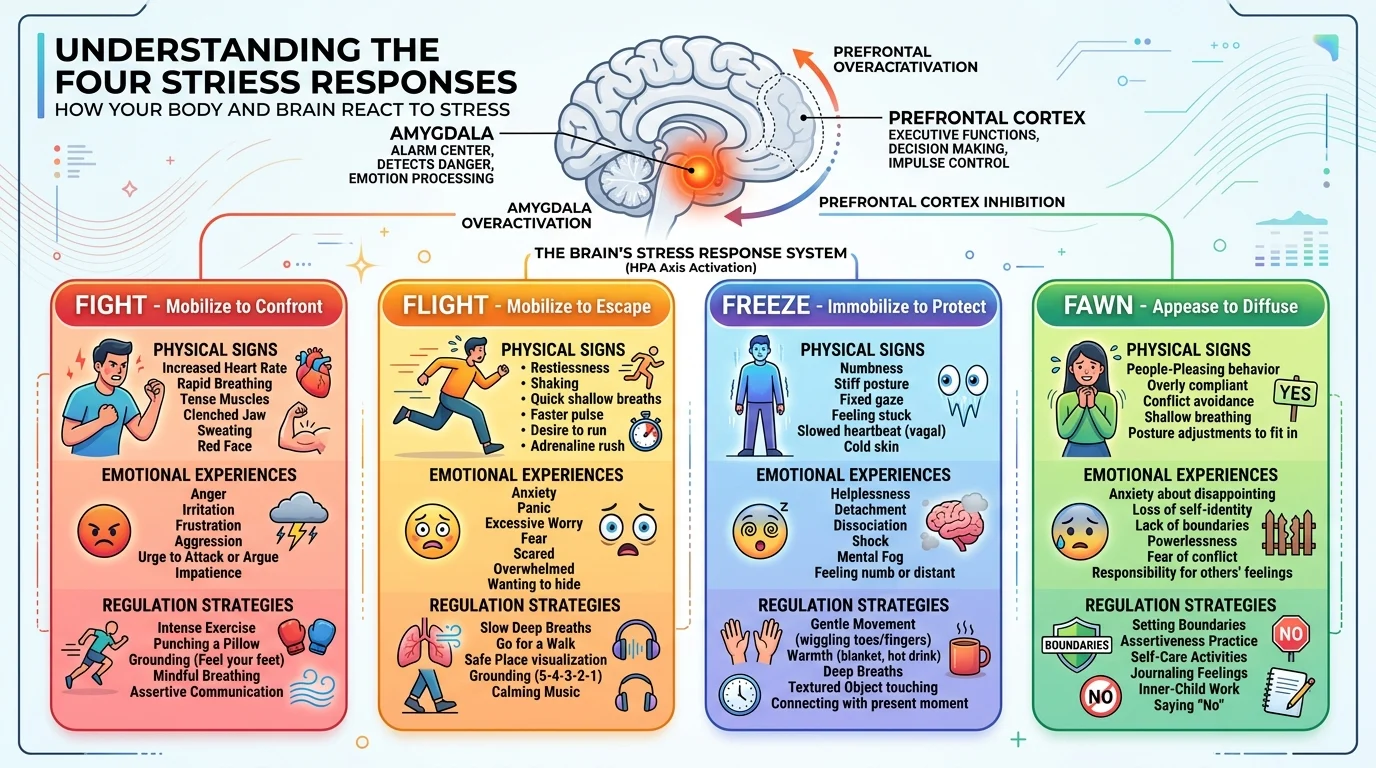
Quick Ans: The fight flight freeze response is your body’s automatic survival reaction to perceived threats. Fight means confronting danger. Flight means escaping it. Freeze means becoming immobile and silent. A fourth response, fawn, involves appeasing the threat. These responses are controlled by the autonomic nervous system, triggered by the amygdala, and powered by stress hormones like adrenaline and cortisol. Understanding them helps you manage anxiety, trauma, and everyday stress.
Your heart pounds. And Your palms sweat. Your muscles tense. In a split second, your body decides: fight, flight, or freeze. This is your survival system at work, and it’s been keeping humans alive for thousands of years.
The fight flight freeze response is an automatic physiological reaction to perceived danger. It’s controlled by the autonomic nervous system, which operates without conscious thought. When your brain detects a threat, the amygdala sounds the alarm, and stress hormones flood your body within milliseconds. Your body prepares to either confront the threat, escape from it, or become completely still.
This system is brilliant for escaping predators. But in modern life, it can misfire. A passive-aggressive email, a difficult conversation, or a looming deadline can trigger the same response as a charging bear. Understanding how fight, flight, freeze, and fawn work helps you recognize your own patterns, manage stress more effectively, and build resilience. Let’s explore the science behind your survival system.
What Is the Fight Flight Freeze Response?
1. The Core Definition
It’s an automatic physiological reaction to perceived harm, attack, or threat to survival.
2. Controlled by the Autonomic Nervous System
This system regulates involuntary body functions like heart rate, breathing, and digestion.
3. Triggered by the Amygdala
The amygdala, your brain’s threat detector, activates the response before your thinking brain catches up.
4. Powered by Stress Hormones
Adrenaline and cortisol flood your system, preparing your body for action.
5. A Survival Mechanism
The response evolved to help humans escape predators and survive physical dangers.
6. Beyond Physical Threats
Emotional threats like rejection, criticism, or embarrassment can trigger the same response.
7. The Four Main Responses
Fight, flight, freeze, and fawn are the primary survival strategies.
8. Not a Choice
These responses happen automatically, below conscious awareness.
9. Temporary but Powerful
The response is designed to be brief, but chronic stress can keep it activated.
10. Different for Everyone
Your dominant response depends on genetics, experience, and learned patterns.
11. Essential for Survival
Without this system, humans wouldn’t have survived as a species.
12. Can Become Dysregulated
Trauma and chronic stress can make the system overreactive or underreactive.
13. Connected to Mental Health
Anxiety, PTSD, and panic disorders involve dysregulated threat responses.
14. Manageable with Practice
You can learn to recognize and regulate your responses.
15. Universal Across Cultures
Every human has this system, regardless of background or upbringing.
The Fight Response
1. What It Looks Like
Fighting involves confronting the threat with aggression or assertiveness.
2. Physical Signs
Racing heart, clenched jaw, tense muscles, shallow breathing, and flushed skin.
3. Emotional Experience
Anger, irritability, frustration, and a desire to control or dominate.
4. Brain Activity
The amygdala activates while the prefrontal cortex, your reasoning center, goes offline.
5. Hormonal Surge
Adrenaline and testosterone surge, preparing the body for physical confrontation.
6. Everyday Examples
Yelling during an argument, snapping at a partner, or becoming aggressive in traffic.
7. Workplace Manifestations
Confrontational emails, arguing with colleagues, or refusing to back down.
8. Childhood Origins
Children who grew up in chaotic homes often develop fight as a primary response.
9. Strengths of This Response
It can be empowering and protective when boundaries need enforcing.
10. Drawbacks
Chronic fight responses damage relationships and increase cardiovascular risk.
11. Healthy Expression
Assertive communication, setting boundaries, and physical exercise.
12. When It Becomes a Problem
Explosive anger, aggression, and difficulty calming down.
13. Healing Strategies
Mindfulness, therapy, and learning to pause before reacting.
14. Connection to Trauma
Trauma survivors often experience heightened fight responses.
15. Recognizing Triggers
Identifying what sets off your fight response is the first step to managing it.
The Flight Response
1. What It Looks Like
Fleeing involves escaping, avoiding, or withdrawing from the threat.
2. Physical Signs
Restlessness, rapid breathing, dilated pupils, and an urge to move.
3. Emotional Experience
Anxiety, panic, fear, and a strong desire to get away.
4. Brain Activity
The amygdala signals danger while the prefrontal cortex struggles to rationalize.
5. Hormonal Surge
Adrenaline prepares the legs and cardiovascular system for running.
6. Everyday Examples
Leaving a party early, avoiding difficult conversations, or procrastinating on stressful tasks.
7. Workplace Manifestations
Missing deadlines, calling in sick, or avoiding meetings with difficult people.
8. Childhood Origins
Children who felt trapped often develop flight as a primary response.
9. Strengths of This Response
It can remove you from genuinely dangerous situations quickly.
10. Drawbacks
Chronic flight responses lead to anxiety disorders and avoidance behaviors.
11. Healthy Expression
Taking breaks, going for walks, and removing yourself from toxic situations.
12. When It Becomes a Problem
Avoiding all challenges, chronic procrastination, and panic attacks.
13. Healing Strategies
Gradual exposure, grounding techniques, and building tolerance for discomfort.
14. Connection to Anxiety
Generalized anxiety disorder often involves an overactive flight response.
15. Recognizing Triggers
Noticing when you want to escape helps you choose a different response.
The Freeze Response
1. What It Looks Like
Freezing involves becoming immobile, silent, and unable to act.
2. Physical Signs
Feeling stuck, numb, holding your breath, and a racing heart that feels frozen.
3. Emotional Experience
Terror, dissociation, helplessness, and feeling trapped.
4. Brain Activity
The parasympathetic nervous system slams the brakes, causing shutdown.
5. Hormonal Response
The body releases both stress hormones and numbing chemicals.
6. Everyday Examples
Going blank during a presentation, freezing in an argument, or feeling paralyzed by decisions.
7. Workplace Manifestations
Inability to speak up in meetings, blanking on tasks, or feeling stuck.
8. Childhood Origins
Children who experienced abuse often develop freeze as a primary response.
9. Strengths of This Response
It can protect by making you invisible to predators or attackers.
10. Drawbacks
Chronic freeze leads to depression, dissociation, and learned helplessness.
11. Healthy Expression
Pausing to think, taking a moment before responding, and intentional stillness.
12. When It Becomes a Problem
Dissociation, inability to make decisions, and feeling permanently stuck.
13. Healing Strategies
Grounding exercises, somatic therapy, and gentle movement.
14. Connection to Trauma
Freeze is the most common response among trauma survivors.
15. Recognizing Triggers
Noticing when you go numb or blank helps you intervene early.
The Fawn Response
1. What It Looks Like
Fawning involves appeasing, pleasing, and complying with the threat.
2. Physical Signs
Smiling when uncomfortable, nodding excessively, and shrinking posture.
3. Emotional Experience
Fear of conflict, need for approval, and loss of self-identity.
4. Brain Activity
The prefrontal cortex works overtime to read others and avoid conflict.
5. Hormonal Response
Oxytocin and stress hormones combine, driving connection-seeking behavior.
6. Everyday Examples
Apologizing constantly, agreeing when you disagree, or ignoring your own needs.
7. Workplace Manifestations
Overworking to please, never saying no, and taking blame unfairly.
8. Childhood Origins
Children who had to please caregivers to feel safe develop fawning.
9. Strengths of This Response
It can de-escalate dangerous situations and maintain social bonds.
10. Drawbacks
Chronic fawning leads to burnout, resentment, and loss of self.
11. Healthy Expression
Kindness, cooperation, and genuine compromise.
12. When It Becomes a Problem
Codependency, people-pleasing, and inability to set boundaries.
13. Healing Strategies
Boundary-setting practice, therapy, and learning to tolerate conflict.
14. Connection to Trauma
Fawning is common in survivors of manipulative abuse and emotional neglect.
15. Recognizing Triggers
Noticing when you abandon your own needs helps you reclaim your voice.
The Science Behind the Response
1. The Amygdala’s Role
This almond-shaped brain region detects threats and triggers the alarm.
2. The Hypothalamus
It activates the pituitary gland and adrenal glands through the HPA axis.
3. The Sympathetic Nervous System
This system prepares the body for action, accelerating heart rate and breathing.
4. The Parasympathetic Nervous System
It calms the body and can trigger freeze through dorsal vagal shutdown.
5. Adrenaline’s Function
This hormone increases heart rate, blood flow to muscles, and energy availability.
6. Cortisol’s Function
This hormone maintains alertness and mobilizes glucose for sustained response.
7. The Prefrontal Cortex
Your reasoning center goes offline during threat response, which is why you can’t think clearly.
8. The Vagus Nerve
This cranial nerve connects the brain to the body and regulates the freeze response.
9. Neuroception
Your nervous system constantly scans for safety and danger below conscious awareness.
10. The Polyvagal Theory
This framework explains how the vagus nerve mediates different survival states.
11. The HPA Axis
The hypothalamus-pituitary-adrenal axis governs the stress response.
12. Epinephrine vs Norepinephrine
These related hormones have distinct roles in the fight or flight response.
13. The Role of the Insula
This brain region helps you feel bodily sensations associated with emotions.
14. The Anterior Cingulate Cortex
It helps regulate emotional responses and detect errors.
15. Neuroplasticity
Your brain can rewire threat responses through practice and therapy.
How to Regulate Your Response
1. Recognize Your Patterns
Notice which response you default to under stress.
2. Name It to Tame It
Labeling your response reduces amygdala activation.
3. Use Deep Breathing
Slow, diaphragmatic breathing activates the parasympathetic system.
4. Ground Yourself
Use the 5-4-3-2-1 technique to engage your senses and return to the present.
5. Move Your Body
Physical activity discharges stress hormones and completes the stress cycle.
6. Practice Mindfulness
Meditation builds awareness of your triggers and responses.
7. Build a Support Network
Safe relationships help your nervous system feel secure.
8. Set Boundaries
Protecting your energy reduces the frequency of threat responses.
9. Seek Professional Help
Therapy can address trauma and dysregulated stress responses.
10. Use Cold Exposure
Cold water on your face activates the dive reflex and calms the system.
11. Try Somatic Experiencing
This therapy focuses on releasing stored tension in the body.
12. Practice Vagal Toning
Humming, singing, and gargling stimulate the vagus nerve.
13. Limit Stimulants
Caffeine and alcohol can exacerbate stress responses.
14. Prioritize Sleep
Rest restores your nervous system’s resilience.
15. Be Patient with Yourself
Regulating your nervous system takes time and practice.
Frequently Asked Questions
What is the fight flight freeze response?
It’s an automatic physiological reaction to perceived threats, preparing your body to confront, escape, or become immobile.
What is the fawn response?
Fawning involves appeasing and pleasing the threat to avoid conflict or danger.
Which response is most common?
It varies by person and situation. Freeze is common in trauma survivors, while fight or flight may dominate in others.
Is the freeze response a form of dissociation?
Freeze can involve dissociation, where you feel disconnected from your body or surroundings.
Can you have more than one response?
Yes. You might freeze initially, then fight, then flee as the situation evolves.
Why does my body freeze instead of fight or flight?
Freeze occurs when fight or flight aren’t possible options, often in situations of inescapable threat.
How do I know which response I default to?
Notice your patterns under stress. Do you get angry, anxious, numb, or accommodating?
Can therapy help with dysregulated responses?
Yes. Therapies like CBT, EMDR, somatic experiencing, and polyvagal-informed therapy help regulate the nervous system.
Is fawning always bad?
No. Fawning can be appropriate in genuinely dangerous situations. It becomes problematic when it’s your only response.
What is polyvagal theory?
A framework explaining how the vagus nerve mediates different survival states, including freeze.
How long does the stress response last?
Acute responses last minutes to hours. Chronic stress can keep the system activated indefinitely.
Can children have these responses?
Yes. Children’s nervous systems are still developing, making them more vulnerable to dysregulation.
What’s the difference between anxiety and the flight response?
Anxiety is an emotional experience. The flight response is the physiological urge to escape.
Does exercise help regulate the stress response?
Yes. Physical activity discharges stress hormones and completes the stress cycle.
Conclusion
The fight flight freeze response is your body’s ancient survival system, designed to keep you alive in the face of danger. Fight confronts. Flight escapes. Freeze immobilizes. Fawn appeases. Each response served our ancestors well, but in modern life, they can misfire.
Understanding your dominant response patterns is the first step toward regulation. When you recognize that your racing heart or sudden numbness is a survival response, not a character flaw, you can respond with compassion instead of criticism.
Chronic stress and trauma can dysregulate this system, but healing is possible. Therapy, mindfulness, movement, and safe relationships help your nervous system learn that the danger has passed. Your body isn’t broken. It’s doing exactly what it was designed to do. With awareness and practice, you can teach it new ways to feel safe.
Share this guide with someone who needs to understand their own survival responses. Bookmark it for the next time your heart races and your mind goes blank. You’re not alone, and you’re not broken. You’re human.
Discover More:
- 301 Response Code: Complete Guide for 2026
- Threat Detection Investigation and Response: Complete Guide for 2026
